Miasto
PL
✓ 50/100
Jerozolimy
Jerusalem,Israel's capital and largest city, is a holy site for Judaism, Christianity, and Islam. Founded in the 4th millennium BCE, it has a population of 970,000 and is located in Judea. Its history includes biblical events, Roman destruction, and modern political disputes.
Populacja: 970 000Założenie: 4th millennium BCERegion: Judea
1
Mention Score
1
News Impact
50%
Trust Level
# Jerusalem: History, Culture & Significance
## Introduction
Jerusalem, known as Yerushalayim in Hebrew, Al-Quds in Arabic, and Hierosolyma in Latin, is Israel's largest city and administrative capital. With a population of 970,000, it sits in the Judean Mountains between the Mediterranean and Dead Seas. This ancient city holds profound religious significance for Judaism, Christianity, and Islam, making it a focal point of cultural and political conflict.
## History
### Ancient Origins
Archaeological evidence shows human settlement in Jerusalem (specifically the Ophel ridge) as early as the 4th millennium BCE. By the Bronze Age, it was a fortified city. According to biblical tradition, King David conquered Jerusalem around 1003 BCE, establishing it as Israel's capital. His son Solomon built the First Temple on Mount Moriah around 960 BCE, making Jerusalem the religious center of Judaism.
### Roman and Byzantine Periods
In 70 CE, Roman forces destroyed the Second Temple during the Jewish revolt. Emperor Hadrian renamed the city Aelia Capitolina and banned Jews from entering. After Constantine's conversion, Christian sites like the Church of the Holy Sepulchre were built. Jerusalem remained under Byzantine control until the Arab conquest in 638 CE.
### Islamic Rule
Under Muslim rule, Jerusalem became Islam's third holiest site. The Dome of the Rock and Al-Aqsa Mosque were constructed on the Temple Mount. The city flourished culturally but faced periods of decline during Crusader and Mamluk rule.
### Modern Era
In 1917, British forces captured Jerusalem. The 1947 UN partition plan proposed an international regime, but war in 1948 divided the city. Israel annexed West Jerusalem, while Jordan controlled East Jerusalem until 1967. Israel's 1980 annexation of East Jerusalem remains unrecognized internationally.
## Geography
Jerusalem is nestled among the Judean Hills, with the Old City enclosed by 4.5 km of walls. Key geographical features include the Kidron Valley to the east, the Hinnom Valley to the south, and the Tyropeon Valley dividing the Old City. Modern neighborhoods extend into the surrounding hills, with the city covering 123 km².
## Demographics
As of 2007, Jerusalem's population was 743,000: 68% Jewish, 30% Arab (mostly Muslim), and 2% Christian. The city has one of Israel's highest birth rates (4.02 per woman) and significant immigration from the former USSR and Ethiopia. Arabs face socioeconomic disparities compared to Jewish residents.
## Religion
Jerusalem is sacred to three faiths:
- **Judaism**: Home to the Western Wall (remnant of the Second Temple) and the City of David.
- **Christianity**: Site of Jesus' crucifixion, burial, and resurrection. Key sites include the Church of the Holy Sepulchre and Via Dolorosa.
- **Islam**: Contains the Al-Aqsa Mosque and Dome of the Rock, Islam's third holiest site.
## Culture
Jerusalem blends ancient traditions with modern diversity. Cultural institutions include the Israel Museum, Yad Vashem Holocaust memorial, and numerous festivals like the Jerusalem Book Fair. The city's cuisine reflects its multicultural heritage, with Arab and Jewish influences.
## Economy
Historically reliant on religious tourism, Jerusalem's economy now includes high-tech industries and services. However, East Jerusalem lags behind West Jerusalem in development. Tourism remains vital, with over 1 million annual visitors.
## Transport
Jerusalem's transport network includes buses, the Jerusalem Light Rail, and the defunct Atarot Airport. The city is connected to Tel Aviv via Highway 1 and the Tel Aviv-Jerusalem railway.
## Sports
Jerusalem's top teams are Beitar Jerusalem (football) and Hapoel Jerusalem (football and basketball). The city also hosts the Jerusalem Marathon and international music festivals.
## Notable Figures
- **Historical**: King David, Solomon, Jesus, Saladin, Herod
- **Modern**: Prime Minister Benjamin Netanyahu, actress Natalie Portman, and Nobel laureates like Daniel Kahneman
## Sister Cities
Jerusalem has partnerships with cities like Rio de Janeiro, Niterói, and New York.
## See Also
- Archaeology of Jerusalem
- Holy Land
- Israeli-Palestinian conflict
## References
[1] Israel Central Bureau of Statistics
[2] Encyclopedia Britannica
[3] UNESCO World Heritage List
## Image Gallery
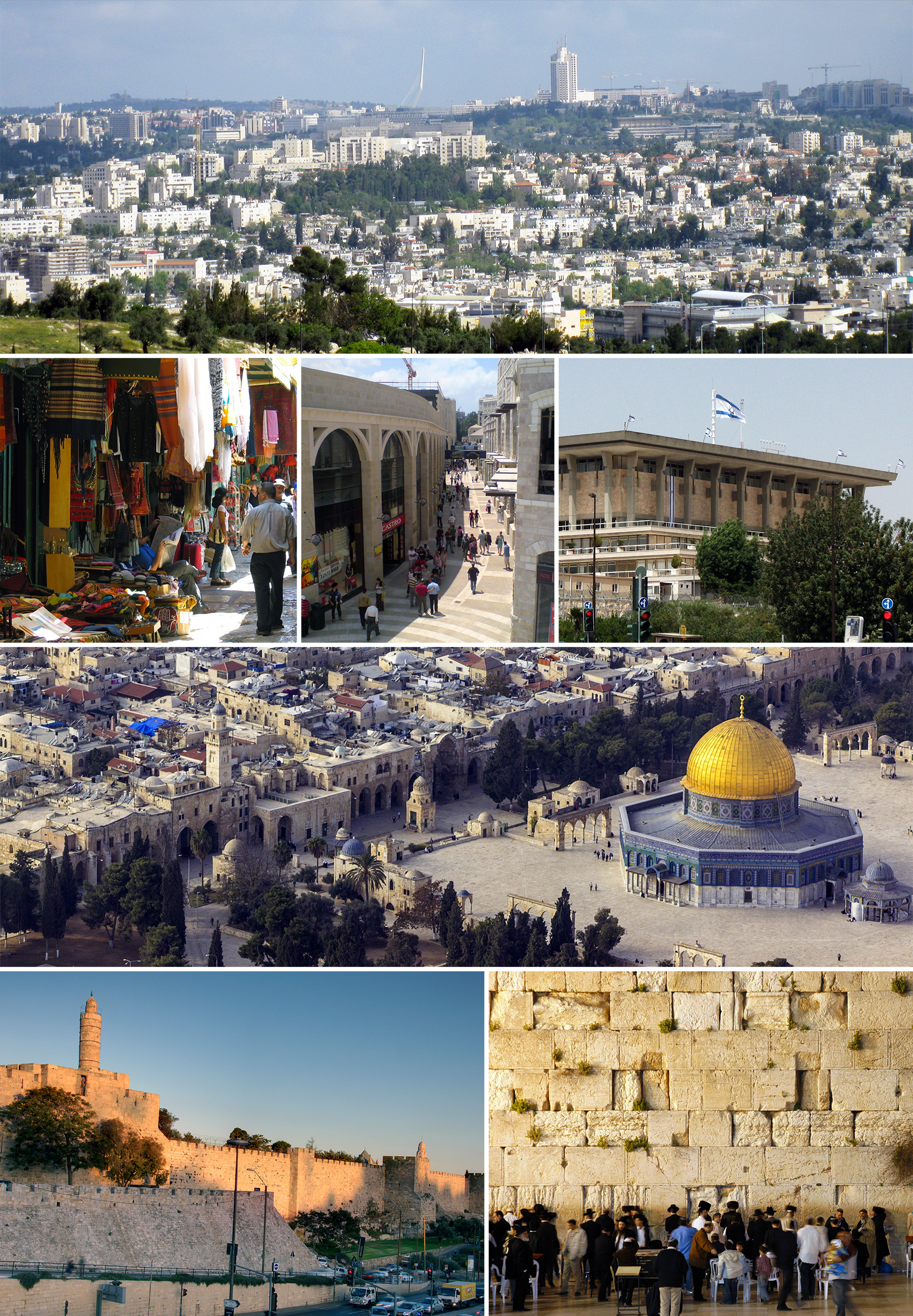
[1] [Jerusalem skyline](https://commons.wikimedia.org/wiki/File:Jerusalem_skyline.jpg)
[2] [Western Wall](https://commons.wikimedia.org/wiki/File:Western_Wall.jpg)
[3] [Dome of the Rock](https://commons.wikimedia.org/wiki/File:Dome_of_the_Rock.jpg)
[4] [Old City walls](https://commons.wikimedia.org/wiki/File:Jerusalem_Walls.jpg)
[5] [Jerusalem Light Rail](https://commons.wikimedia.org/wiki/File:Jerusalem_Light_Rail.jpg)
Mapa Powiązań
Neural_Network // Co-Mentioned_Entities
| Podmiot | Typ | Siła powiązania |
|---|---|---|
| Jezus Chrystus | person | 1× |
| Kościół katolicki | organization | 1× |
| Polska | country | 1× |
Najnowsze Wzmianki
Live_Feed // 1 artykułów

>_ Jerozolimy
Miasto // Entity_Profile
Miasto // Entity_Profile
[DATA] Jerusalem,Israel's capital and largest city, is a holy site for Judaism, Christianity, and Islam. Founded in the 4th millennium BCE, it has a population of 970,000 and is located in Judea. Its history includes biblical events, Roman destruction, and modern political disputes.
[METRICS] Encja posiada 1 wzmianek w bazie oraz 1 powiązanych artykułów. Trust Score: 50/100.
Wersja statyczna dla wyszukiwarek. Pełna wersja interaktywna z grafiką dostępna po włączeniu JavaScript.