# Ethernet over Twisted-Pair Technologies in Automotive Applications
## Introduction
Ethernet over twisted-pair (Twisted Automotive) technologies utilize twisted-pair cables for the physical layer of Ethernet networks. These technologies are a subset of all Ethernet physical layers, with early implementations using coaxial cables before transitioning to twisted-pair for cost and deployment advantages.
## Historical Development
Early Ethernet used coaxial cables, but StarLAN (1986) demonstrated the viability of unshielded twisted pair (UTP). This led to the development of 10BASE-T (1990), followed by 100BASE-TX, 1000BASE-T, and 10GBASE-T. Single-pair Ethernet (SPE) variants like 10BASE-T1S and 10BASE-T1L were standardized in IEEE 802.3cg-2019, with 10BASE-T1S targeting automotive and IoT applications and 10BASE-T1L supporting up to 1 km distances.
## Key Standards and Variants
- **10BASE-T1S**: Designed for automotive short-distance applications, supporting 10 Mbps with a PHY-Level Collision Avoidance (PLCA) scheme. It competes with CAN XL and is used in IoT.
- **10BASE-T1L**: A long-distance variant supporting up to 1 km, ideal for industrial IoT.
- **SPE Extensions**: 2.5GBASE-T1, 5GBASE-T1, and 10GBASE-T1 support higher speeds over single pairs, with 25GBASE-T1 standardized in 2023.
## Cabling and Connectors
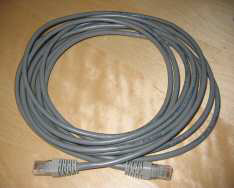
Most Ethernet cables use 8P8C connectors (e.g., Cat 5e/6/7/8), but single-pair variants require specialized connectors:
- **IEC 63171-1 LC**: 2-pin connector for harsh environments.
- **IEC 63171-6**: Industrial connectors with various locking mechanisms (M8, M12).
- **M12X**: Metal screw connector for factory automation.
## Applications and Advantages
- **Automotive**: Reduces wiring complexity, supports in-vehicle networks, and integrates with CAN bus.
- **IoT**: Enables low-power, long-distance communication in smart devices.
- **Power Delivery**: Power over Data Lines (PoDL) supports up to 50W.
## Challenges and Considerations
- **Crosstalk and Attenuation**: High-speed standards require Category 5e/6/7 cables and strict length limits (100m for 1000BASE-T).
- **Duplex Mismatch**: Misconfigured autonegotiation can halve effective speeds.
- **Connector Durability**: 8P8C connectors are fragile; industrial variants (M12X, IEC 63171) offer better reliability.
## Future Directions
Single-pair Ethernet is expanding into 25G/40G speeds, with standards like 802.3cy enabling 25GBASE-T1 over 11m. This positions Twisted Automotive as a scalable solution for next-gen automotive and IoT networks.
## Conclusion
Twisted Automotive technologies represent a significant evolution in Ethernet, enabling robust, cost-effective networks in demanding environments. Their adoption in automotive and IoT sectors underscores their versatility and future potential.
📊
Mapa Powiązań
Neural_Network // Co-Mentioned_Entities
📰
Najnowsze Wzmianki
Live_Feed // 1 artykułów
>_ Twisted Automotive
Firma // Entity_Profile
[DATA] Ethernet over twisted-pair technologies, particularly 10BASE-T1S and 10BASE-T1L, are used in automotive and IoT applications. These standards support speeds up to 10 Gbps over single twisted pairs, with 10BASE-T1S designed for short distances and 10BASE-T1L for up to 1 km. The technology addresses automotive electrical noise and enables the Internet of Things.
[METRICS] Encja posiada 1 wzmianek w bazie oraz 1 powiązanych artykułów. Trust Score: 50/100.
Wersja statyczna dla wyszukiwarek. Pełna wersja interaktywna z grafiką dostępna po włączeniu JavaScript.