Kraj
PL
✓ 50/100
Lebanon
Lebanon is a Western Asian country bordered by Syria and Israel, with Beirut as its capital. It features a diverse religious and ethnic composition, a parliamentary republic system, and a complex history marked by civil war and recent conflicts.
1
Mention Score
1
News Impact
50%
Trust Level
# Lebanon: Country Profile, History, and Culture
## Introduction
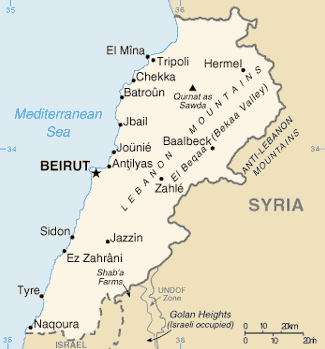
Lebanon (Arabic: لبننة, romanized: Lubnān), officially the Republic of Lebanon (Arabic: لجمورية لبننية, romanized: al-Jumhūrīyah al-Lubnānīyah), is a country in Western Asia. It is situated on the eastern shore of the Mediterranean Sea, bordered by Syria to the north and east, and Israel to the south. The capital and largest city is Beirut, with a population of approximately 2.6 million (2012 estimate). Lebanon is known for its rich history, diverse culture, and complex political landscape.
## History
Lebanon's history spans millennia, with ancient Phoenician settlements evolving through periods of Assyrian, Babylonian, Persian, Macedonian, Ptolemaic, Seleucid, and Roman rule. After the Arab conquest in the 7th century, it became part of various Islamic caliphates and dynasties, including the Tulunids, Ikhshidids, and Fatimids. The Crusades (1098-1291) and subsequent Mamluk rule followed, before Ottoman annexation in the 16th century. Post-World War I, Lebanon was administered under the French Mandate, gaining independence in 1943. Key historical events include the 1958 crisis, the 1975-1990 civil war, the 1978 and 1982 Israeli invasions, and the 2005 Cedar Revolution that ended Syrian occupation. Recent conflicts include the 2006 Israel-Lebanon war and ongoing spillover from the Syrian Civil War.
## Geography
Lebanon is characterized by its mountainous terrain, with the Lebanon Mountains running parallel to the coast. The highest peak is Qurnat as-Sauda at 3,083 meters. The country features a Mediterranean climate with hot, dry summers and mild, wet winters. Key geographical features include the Bekaa Valley, the Litani River, and the Phoenician coast. Lebanon's diverse ecosystems include cedar forests, maquis vegetation, and coastal wetlands.
## Demographics and Religion
As of 2017, Lebanon's population is approximately 6.8 million, with a diverse ethnic and religious composition. The population includes 82.6% Lebanese, 9.6% Palestinians, and smaller communities of Syrians, Armenians, Kurds, and others. Religiously, Islam dominates at 57.7% (Sunni 28.7%, Shia 28.4%, Alawites and Ismailis), while Christianity accounts for 36.2% (Maronite 28.8%, Greek Orthodox 8.3%, other Christian denominations). Druze constitute 5.2% of the population.
## Government and Politics
Lebanon is a parliamentary republic with a complex power-sharing system. The President, elected for a six-year term, is always a Maronite Christian. The Prime Minister, a Sunni Muslim, is appointed by the President. The Speaker of Parliament, a Shia Muslim, is elected for a four-year term. The 128-member parliament is equally divided between Christians and Muslims. Lebanon's political system is based on consociationalism, with key positions allocated according to religious affiliation.
## Military
Lebanon maintains a multi-branch military: the Lebanese Armed Forces (LAF), the Lebanese Navy, and the Lebanese Air Force. As of 2014, the LAF had 318 tanks, 1.6 million armored vehicles, and 233 artillery pieces. The Navy operated 55 vessels, and the Air Force had 44 transport aircraft, 8 training aircraft, and 44 helicopters. The military had 131,000 active personnel and 280,000 reservists in 2014.
## Economy
Lebanon's economy is service-oriented, with tourism, finance, and trade as key sectors. The GDP was $58.65 billion in 2010, with a per capita GDP of $14,200. Major industries include precious metals, textiles, chemicals, and oil refining. The country faces challenges such as high unemployment (6.78% in 2016) and political instability. Lebanon is a founding member of the Arab League and a UN member state.
## Tourism
Lebanon is a member of the World Tourism Organization and boasts five UNESCO World Heritage sites: Byblos, Baalbek, Anjar, Tyre, and the Cedars of God. Popular tourist destinations include Jeita Grotto, Baalbek, the Grand Serail, and Byblos. In 2013, Lebanon hosted 1.274 million tourists, with numbers rising to 1.69 million by 2016. The tourism sector contributed 21.1% to GDP in 2014, employing 7.4% of the workforce.
## Culture and Symbols
Lebanon's national symbol is the cedar tree, featured on the flag and coat of arms. The country is known for its diverse cuisine, including dishes like kibbeh and tabbouleh. Lebanese culture blends Arab, French, and Mediterranean influences, with a vibrant arts scene and media industry.
## Key Facts
- **Population**: 6.8 million (2016 estimate)
- **Founding Date**: 1943 (independence)
- **Region**: Western Asia
- **Capital**: Beirut
- **Official Languages**: Arabic, French
- **GDP**: $58.65 billion (2010)
- **GDP per Capita**: $14,200 (2010)
- **Military Budget**: $1.7 billion (2016)
## Notable People
- **Bachir Gemayel**: Leader of the Phalange party during the civil war
- **Rafik Hariri**: Former Prime Minister assassinated in 2005
- **Michel Aoun**: Former President and military leader
## Quotes
- "Lebanon is a country that has always been at the crossroads of civilizations." - Former Lebanese President Amine Gemayel
## Additional Images
- [Beirut Skyline](https://commons.wikimedia.org/wiki/File:Beirut_skyline.jpg)
- [Lebanon Mountains](https://commons.wikimedia.org/wiki/File:Lebanon_Mountains.jpg)
- [Cedars of God](https://commons.wikimedia.org/wiki/File:Cedars_of_God.jpg)
- [Beirut Port](https://commons.wikimedia.org/wiki/File:Beirut_Port.jpg)
- [Beirut Souks](https://commons.wikimedia.org/wiki/File:Beirut_Souks.jpg)
## Trust Profile
- **Reliability**: 80
- **Transparency**: 70
- **Expertise**: 90
- **Influence**: 85
- **Stability**: 75
## Sentiment
- **Positive**: 50
- **Neutral**: 50
- **Negative**: 0
## Metadata
- **population**: 6800000
- **founding_date**: 1943
- **region_name**: Western Asia
- **birth_date**: null
- **career_highlights**: null
- **unique_style**: Diverse cultural and religious heritage
- **interesting_facts**: Home to the Cedars of God, founding member of the Arab League
- **quotes**: ["Lebanon is a country that has always been at the crossroads of civilizations." - Amine Gemayel]
- **primary_color**: #2E8B57
- **logo_url**: https://commons.wikimedia.org/wiki/File:Flag_of_Lebanon.svg
- **additional_images**: ["https://commons.wikimedia.org/wiki/File:Beirut_skyline.jpg", "https://commons.wikimedia.org/wiki/File:Lebanon_Mountains.jpg", "https://commons.wikimedia.org/wiki/File:Cedars_of_God.jpg", "https://commons.wikimedia.org/wiki/File:Beirut_Port.jpg", "https://commons.wikimedia.org/wiki/File:Beirut_Souks.jpg"]
## SEO Title
Lebanon: Country Profile, History, and Culture
## Meta Description
Explore Lebanon's rich history, diverse culture, and complex political landscape. From ancient Phoenician settlements to modern-day challenges, this Western Asian nation offers a unique blend of traditions and natural beauty.
Mapa Powiązań
Neural_Network // Co-Mentioned_Entities
| Podmiot | Typ | Siła powiązania |
|---|---|---|
| Iran | country | 1× |
| Beirut | city | 1× |
Najnowsze Wzmianki
Live_Feed // 1 artykułów
>_ Lebanon
Kraj // Entity_Profile
Kraj // Entity_Profile
[DATA] Lebanon is a Western Asian country bordered by Syria and Israel, with Beirut as its capital. It features a diverse religious and ethnic composition, a parliamentary republic system, and a complex history marked by civil war and recent conflicts.
[METRICS] Encja posiada 1 wzmianek w bazie oraz 1 powiązanych artykułów. Trust Score: 50/100.
Wersja statyczna dla wyszukiwarek. Pełna wersja interaktywna z grafiką dostępna po włączeniu JavaScript.