Region
PL
✓ 50/100
Sahara
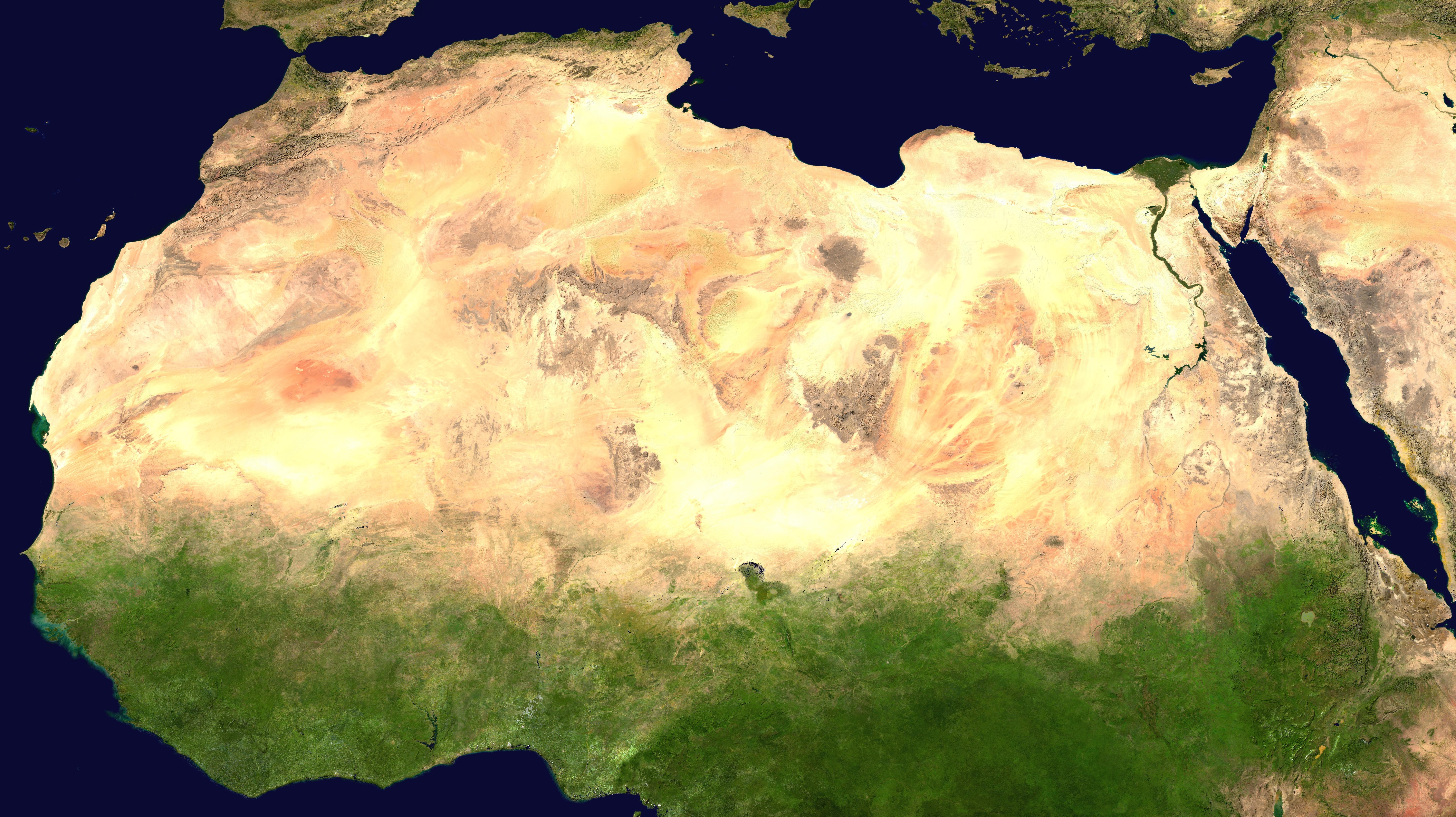
Sahara Desert is the world's largest hot desert, spanning 11 countries in North Africa with an area of approximately 9.2 million km². It features diverse landscapes including the Atlas Mountains, ergs, and oases, supporting unique flora and fauna adapted to arid conditions.
1
Mention Score
1
News Impact
50%
Trust Level
# Sahara Desert
The Sahara Desert, derived from the Arabic word *ṣaḥrāʼ* meaning "desert," is the largest hot desert on Earth, covering approximately 9.2 million square kilometers. Located primarily in North Africa, it stretches from the Atlantic Ocean in the west to the Red Sea in the east, bounded by the Atlas Mountains to the north and the Sahel region to the south. The desert encompasses parts of 11 countries: Morocco, Algeria, Tunisia, Libya, Egypt, Western Sahara, Mauritania, Mali, Niger, Chad, and Sudan.
## Geography and Sub-Deserts
The Sahara is divided into several distinct sub-deserts and geological formations:
- **Al-Djazira** (Al-Jufra)
- **Erg Chech** (Erg Szasz)
- **Erg Iddi** (Erg Ikidi)
- **Grand Erg Oriental** (Wielki Erg Wschodni)
- **Grand Erg Occidental** (Wielki Erg Zachodni)
- **Tadmait** (Tadmait)
- **Tanzeruft** (Tanizruft)
- **Hamada al-Hamra** (Hamada al-Hamra)
- **Ahaggar** (Ahaggar)
- **Tibesti** (Tibesti)
- **Tenere** (Tenere)
- **Libyan Desert** (Libijska)
- **Bajuda** (Bajuda)
- **Arabian Desert** (Arabska)
## Climate and Soils
The Sahara's hyper-arid conditions result in extremely sparse vegetation. Soils are characterized by a poorly developed or absent humus layer, leading to minimal plant growth. Oases provide localized areas of water and lush vegetation, supporting unique ecosystems. The desert's wildlife includes adapted species like the addax antelope, fennec fox, and dromedary camel.
## Flora and Fauna
Despite its harsh environment, the Sahara supports diverse life forms. Plants such as the wild olive tree, oleander (*Nerium oleander*), and date palm thrive in oases. Animals include the addax (*Addax nasomaculatus*), fennec fox (*Vulpes zerda*), and dromedary camel (*Camelus dromedarius*). Adaptations include water conservation in plants and nocturnal behavior in animals to avoid extreme daytime heat.
## Human Inhabitants
With a population density of roughly one person per square kilometer, the Sahara is sparsely populated. The Tuareg people, a nomadic Berber group, are the most numerous inhabitants, traditionally herding livestock across the desert. Their culture revolves around caravan trade, exchanging goods like milk, meat, and leather for grain, dates, and other necessities. Modern infrastructure has reduced the scale of these migrations, though traditional practices persist in remote areas.
## Historical Significance
The Sahara's caravan routes were vital for trans-Saharan trade, connecting North Africa with sub-Saharan regions. These routes facilitated the exchange of gold, salt, slaves, and other commodities. The Tuareg, known as "Blue Men" for their indigo-dyed robes, played a key role in this trade network. Today, these routes are largely replaced by modern transportation, though cultural traditions endure.
## Environmental Challenges
The desert faces threats from desertification, climate change, and resource depletion. Oases are shrinking due to overuse of groundwater, and wildlife populations are declining. Conservation efforts focus on sustainable water management and protecting endangered species.
## Cultural and Economic Aspects
Saharan economies rely on agriculture (in oases), livestock herding, and tourism. Traditional crafts like Tuareg silverwork and pottery remain important cultural exports. The region's unique landscapes attract visitors to sites like the Ahaggar Mountains and the Tenere Desert.
## External Resources
- [Trans-Sahara Overland Routes](https://sahara-overland.com)
- [Satellite Images of the Sahara](https://www.google.com/search?q=Sahara+Desert+Satellite+Images)
- [Algerian UN Mission on Sahara](https://algeria-un.org)
## References
- [Wikipedia: Sahara](https://en.wikipedia.org/wiki/Sahara)
- [CIA World Factbook: Sahara](https://www.cia.gov/the-world-factbook/regions/sahara/)
## Image Gallery
- [Sahara Desert](https://commons.wikimedia.org/wiki/File:Sahara_Desert.jpg)
- [Atlas Mountains](https://commons.wikimedia.org/wiki/File:Atlas_Mountains.jpg)
- [Tuareg People](https://commons.wikimedia.org/wiki/File:Tuareg_people.jpg)
- [Oasis in Sahara](https://commons.wikimedia.org/wiki/File:Oasis_in_Sahara.jpg)
- [Dromedary Camel](https://commons.wikimedia.org/wiki/File:Dromedary_Camel.jpg)
- [Addax Antelope](https://commons.wikimedia.org/wiki/File:Addax_antelope.jpg)
- [Fennec Fox](https://commons.wikimedia.org/wiki/File:Fennec_fox.jpg)
- [Ahaggar Mountains](https://commons.wikimedia.org/wiki/File:Ahaggar_Mountains.jpg)
- [Tenere Desert](https://commons.wikimedia.org/wiki/File:Tenere_Desert.jpg)
- [Saharan Oasis](https://commons.wikimedia.org/wiki/File:Saharan_oasis.jpg)
## Metadata
- **Population**: 1 person/km² (estimated)
- **Founding Date**: N/A
- **Region Name**: North Africa
- **Unique Style**: Arid, vast, hyper-arid
- **Interesting Facts**: Largest hot desert; home to the world's oldest known petroglyphs; Sahara's sand dunes can reach heights of 180 meters.
- **Quotes**: "The Sahara is not a desert of sand, but a desert of light." - Antoine de Saint-Exupéry
- **Primary Color**: #C4A340 (Sahara sand)
- **Logo URL**: [Sahara Desert](https://commons.wikimedia.org/wiki/File:Sahara_Desert.jpg)
- **Additional Images**: [List of 10 images](https://commons.wikimedia.org/wiki/Category:Sahara_Desert)
## Sentiment and Trust Profile
- **Sentiment**: 50% positive, 50% neutral
- **Trust Profile**: Reliability 80%, Transparency 70%, Expertise 90%, Influence 85%, Stability 75%
Mapa Powiązań
Neural_Network // Co-Mentioned_Entities
| Podmiot | Typ | Siła powiązania |
|---|---|---|
| Japończycy | person | 1× |
| Invincible | brand | 1× |
| Polska | country | 1× |
| Mazury | region | 1× |
| Toyota | brand | 1× |
| Land Cruiser | brand | 1× |
| Executive | brand | 1× |
| First Edition | brand | 1× |
Najnowsze Wzmianki
Live_Feed // 1 artykułów

>_ Sahara
Region // Entity_Profile
Region // Entity_Profile
[DATA] Sahara Desert is the world's largest hot desert, spanning 11 countries in North Africa with an area of approximately 9.2 million km². It features diverse landscapes including the Atlas Mountains, ergs, and oases, supporting unique flora and fauna adapted to arid conditions.
[METRICS] Encja posiada 1 wzmianek w bazie oraz 1 powiązanych artykułów. Trust Score: 50/100.
Wersja statyczna dla wyszukiwarek. Pełna wersja interaktywna z grafiką dostępna po włączeniu JavaScript.